Service, UX, UI design
Wien Energie Tanke
Discover how we re-designed the electric car charging experience for the largest energy provider in Austria

“The Mindtech team have managed to build an amazing prototype for this demanding use case in such a short period of time”
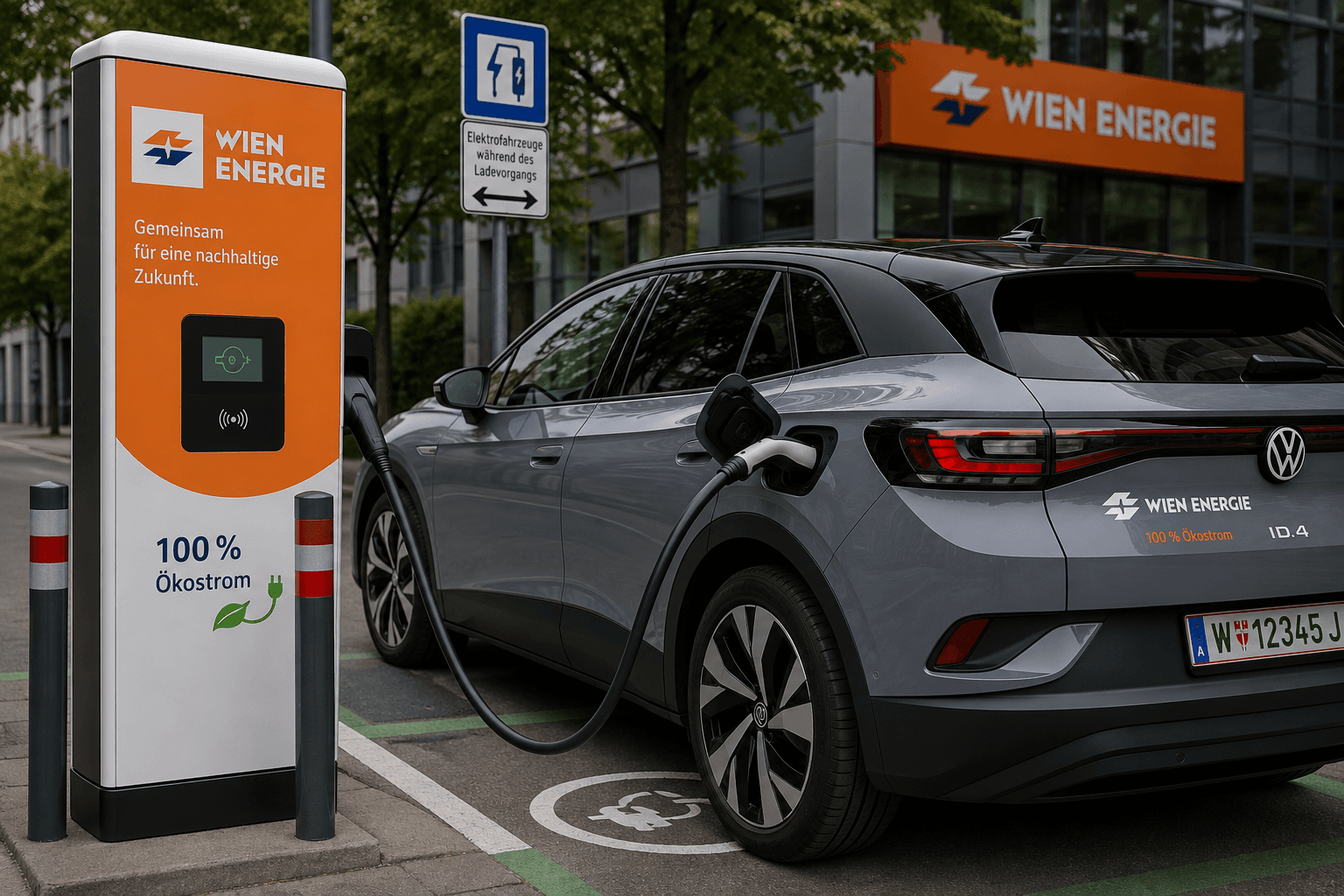
Wien Energie – Redesigning the Electric Vehicle Charging Experience
Transforming EV charging through UX research, strategic consulting, UX/UI design, and end-to-end service design.
Client: Wien Energie
Industry: Energy, E-Mobility, Electric Vehicle Charging
Location: Vienna, Austria
Services: UX Research, UX/UI Design, Digital Product Consulting, Service Design, Product Strategy, Concept Development
Platform: Mobile Application, Digital EV Charging Ecosystem
Project Overview
As electric mobility becomes an increasingly important part of everyday transportation, energy providers face the challenge of creating digital services that make electric vehicle charging simple, intuitive, and accessible.
For Wien Energie, one of Austria's leading energy providers, Mindtech Apps worked on the comprehensive redesign of the Wien Energie Tanke mobile application and the broader electric vehicle charging service experience.
Our engagement went beyond creating a new user interface. We combined strategic consulting, user experience research, UX/UI design, digital product concept development, and service design to rethink how drivers interact with EV charging infrastructure throughout their journey.
From discovering available charging stations to navigating charging-related information and interacting with digital services, we explored how the overall customer experience could become more intuitive, consistent, and efficient.
The result was a comprehensive UX/UI and service design concept that helped shape the evolution of the Wien Energie Tanke experience. Multiple elements of our proposed designs and service concepts were subsequently implemented in the application and its digital user flows, contributing to a smoother user experience and a more streamlined charging process.
The Challenge: Making EV Charging Simpler and More Intuitive
Electric vehicle charging is more than a single interaction between a driver and a charging station.
The experience involves several connected steps, from finding a suitable location and understanding charger availability to accessing charging information, starting a session, and reviewing the details afterward.
For users, each interaction needs to be clear and predictable. Uncertainty about charging locations, technical compatibility, availability, or the next step in the process can introduce unnecessary complexity.
For an energy provider operating a growing e-mobility service, these challenges extend beyond the mobile application itself.
The digital experience must connect users with a physical charging network while presenting information consistently across different stages of the customer journey.
The challenge for Mindtech was therefore not simply to modernize the appearance of the Tanke application, but to explore how the entire EV charging customer experience could be redesigned around real user needs.
Our work focused on several strategic questions:
- How can drivers discover and evaluate charging options more intuitively?
- How can the application communicate essential charging information more clearly?
- How can the process of interacting with a charging station become more straightforward?
- How can digital touchpoints support a consistent experience throughout the charging journey?
- How can the wider service ecosystem evolve to better support changing customer expectations?
Addressing these questions required a combination of user-centered design, business analysis, and service-level thinking.
Our Approach: Connecting Product Design with Service Strategy
At Mindtech, we approached the project as a broader digital product and service transformation initiative.
Rather than treating individual screens as isolated design tasks, we considered how the application fits into the larger ecosystem of electric mobility services.
Our work combined research, analysis, strategic consulting, design exploration, and concept development to create a more coherent charging experience.
1. UX Research and Customer Journey Analysis
Understanding the complete EV charging journey before redesigning the interface.
We began by examining the experience from the perspective of electric vehicle drivers, considering the different situations in which users interact with charging services.
The research and discovery process informed our understanding of user expectations, important information requirements, and potential friction points throughout the charging journey.
Our analysis considered key moments in the user experience, including charging station discovery, access to relevant charging information, interaction with the charging service, and post-charging activities.
By approaching the experience as a connected journey, we could evaluate opportunities for improvement beyond individual interface elements.
This research-informed approach provided the foundation for subsequent UX/UI and service design decisions.
2. Strategic Consulting and Digital Product Concept Development
Reimagining how digital services can support the future of electric mobility.
A significant part of our engagement involved consulting and concept development.
We collaborated on a broader vision for the Wien Energie Tanke experience, exploring how digital product design and service improvements could work together to simplify the customer journey.
Our work considered the relationship between the mobile application, charging infrastructure, customer information, and the digital interactions required to support charging activities.
Instead of focusing exclusively on short-term interface improvements, we developed concepts that could inform the ongoing evolution of the service.
This strategic perspective helped connect user experience opportunities with the wider objectives of the e-mobility ecosystem.
3. UX Architecture and User Flow Redesign
Creating clearer, more intuitive paths through complex charging interactions.
An effective EV charging application must present relevant information at the right moment without overwhelming the user.
We redesigned the UX structure and explored improvements to key interaction flows, with a focus on simplicity, clarity, and consistency.
Our design approach prioritized understandable navigation, clear information hierarchy, and more intuitive relationships between user actions and system responses.
We considered how drivers move through different stages of the charging process and how the interface could help them complete relevant tasks with less friction.
The objective was to establish a more coherent experience that supports both new and experienced electric vehicle users.
4. Mobile UX/UI Design
Translating complex charging functionality into a modern digital experience.
Building on the research and product concepts, Mindtech developed redesigned UX/UI concepts for the Wien Energie Tanke mobile application.
The interface design work focused on making essential functionality easier to understand and access while creating a more consistent and approachable user experience.
Our work addressed the visual presentation of charging information, interaction patterns, navigation, and the overall structure of key mobile screens.
We sought to create a design that balanced visual clarity with the practical requirements of an application connected to physical infrastructure and real-world user activities.
Rather than introducing visual complexity, our approach emphasized usability, consistency, and efficient task completion.
5. Service Design Across the EV Charging Ecosystem
Improving the experience beyond the boundaries of the mobile application.
One of the defining aspects of the project was our broader service design involvement.
Electric vehicle charging involves a combination of physical infrastructure, digital applications, information systems, and customer interactions.
A successful user experience depends on how effectively these different elements work together.
Our service design work examined the relationships between digital touchpoints and the wider charging journey, identifying opportunities to make the experience more coherent.
We explored how improved service concepts could reduce unnecessary complexity and support a more consistent interaction between drivers and charging infrastructure.
This approach allowed us to address the charging experience at an ecosystem level, rather than limiting the project to interface design alone.
Designing Around the Key Moments of EV Charging
The Wien Energie Tanke experience connects multiple stages of the electric vehicle charging journey.
Our redesign and service concepts considered how these interactions could be made more understandable and seamless.
Finding the Right Charging Station
Discovering an appropriate charging location is one of the first steps in the charging journey.
Users need to identify suitable stations and understand relevant information before deciding where to charge.
Our UX work considered how station discovery, visual hierarchy, and access to charging information could be presented more intuitively.
The goal was to help users navigate available options with greater clarity and confidence.
Understanding Charging Information
Charging services involve technical and operational information that must be communicated in a way that is useful to everyday drivers.
We explored how the application could present relevant charging details through clearer information structures and more accessible interface patterns.
This included considering how users interpret information when making charging decisions and interacting with the service.
Starting and Managing a Charging Session
The transition from finding a charging station to using it is a critical part of the customer experience.
Our design concepts explored ways to simplify the digital interactions involved in the charging process, reducing unnecessary steps and making the experience more predictable.
We focused on helping users understand what actions are required and what to expect throughout the interaction.
Creating a Consistent End-to-End Experience
The charging journey does not end with initiating a session.
Users may need to understand charging progress, review relevant information, or interact with the service again later.
Our broader service design work considered how these touchpoints could contribute to a more consistent and connected digital experience.
The objective was to create a service that feels coherent across the different stages of EV charging.
From Strategic Concepts to Implemented Improvements
An important outcome of the engagement was the translation of our design and service recommendations into real improvements.
Multiple elements of Mindtech's proposed UX/UI designs and service concepts were implemented in the Wien Energie Tanke application and its digital user flows.
These contributions helped shape the evolution of the customer experience, supporting more intuitive interactions and a more streamlined charging process.
The implementation of selected concepts demonstrated how strategic UX consulting and service design can influence real digital products rather than remaining purely conceptual exercises.
Not every proposed concept was necessarily implemented, but the engagement provided both actionable design improvements and a broader foundation for the service's development.
Our role focused on consulting, research, product and service concepts, and UX/UI design, with selected recommendations subsequently incorporated into the digital experience.
The Outcome: A More User-Centered EV Charging Experience
The project contributed to the evolution of Wien Energie's digital e-mobility experience through a combination of strategic thinking and practical design work.
Key outcomes included:
A redesigned mobile app experience
We developed UX/UI concepts focused on improving usability, navigation, and the presentation of information throughout the EV charging journey.
A broader digital service vision
Our work extended beyond the mobile application to consider the relationship between charging infrastructure, digital touchpoints, and customer interactions.
More intuitive charging workflows
Selected UX and service design recommendations were incorporated into digital user flows, contributing to a smoother and more understandable charging experience.
Actionable strategic and design concepts
The engagement produced practical concepts that supported the evolution of the Wien Energie Tanke application and the wider charging service.
Experience connecting UX/UI with complex service ecosystems
The project demonstrated Mindtech's ability to combine digital product consulting, UX research, mobile application design, and service design in a complex energy and mobility environment.
Why Service Design Matters in E-Mobility
Electric mobility presents a particular challenge for digital product teams because the experience depends on software, physical infrastructure, and service operations working together.
A mobile application may provide access to charging information and digital controls, but users experience the service as a complete journey.
If information is unclear or digital interactions are disconnected from real-world activities, even a visually polished application may feel complicated.
This is why effective EV charging UX/UI design requires more than attractive interfaces.
It requires an understanding of how customers make decisions, interact with infrastructure, and move between digital and physical touchpoints.
Our work for Wien Energie reflects this broader approach.
By combining UX research, digital product strategy, and service design, we helped explore improvements at the intersection of customer needs, software functionality, and operational services.
Our Expertise in Energy, Mobility and Digital Product Design
The Wien Energie Tanke engagement demonstrates Mindtech's experience supporting companies developing digital products in complex, service-intensive industries.
Our capabilities include:
- UX Research and Product Discovery: Understanding customer journeys, user needs, and digital service challenges.
- UX/UI Design: Creating intuitive interfaces and coherent experiences for mobile and web applications.
- Service Design: Connecting digital products with broader business processes, physical touchpoints, and customer interactions.
- Digital Product Consulting: Helping organizations translate business challenges into actionable digital concepts.
- Mobile Application Development: Designing and engineering cross-platform mobile products using React Native, TypeScript, and related technologies.
- Enterprise Software Engineering: Developing and integrating complex software systems, cloud infrastructure, and digital platforms.
From energy and e-mobility to financial technology, industrial IoT, and enterprise software, we help organizations design digital experiences that are both technically practical and centered around real user needs.
Frequently Asked Questions
What did Mindtech Apps do for Wien Energie?
Mindtech worked on the redesign of the Wien Energie Tanke mobile application and the broader EV charging service experience. Our engagement included strategic consulting, UX research, UX/UI design, digital product concept development, and service design.
Did Mindtech develop the Wien Energie Tanke application?
Our documented contribution focused on consulting, UX research, UX/UI design, and the development of product and service concepts. Multiple proposed design elements and digital user flow improvements were subsequently implemented in the application. We do not present the entire application's software development as part of our engagement.
What was the objective of the Wien Energie Tanke redesign?
The objective was to make electric vehicle charging more intuitive and improve the user experience across the mobile application and broader digital charging service. The work considered the complete customer journey, from accessing charging information to interacting with the service.
What is the difference between UX/UI design and service design?
UX/UI design focuses on how users interact with a digital product, including its interface, navigation, and functionality. Service design considers the wider experience across multiple touchpoints, systems, business processes, and physical interactions. For EV charging, both disciplines are important because the digital application is closely connected to physical charging infrastructure.
Were Mindtech's design concepts implemented?
Yes. Multiple elements of our proposed UX/UI and service design concepts were implemented in the Wien Energie Tanke application and related digital user flows. These contributions helped support a more intuitive user experience and streamlined charging interactions. The redesign was part of a broader collaborative effort involving multiple teams and stakeholders.
Does Mindtech provide UX/UI and service design for energy and mobility companies?
Yes. Mindtech offers UX research, UX/UI design, digital product consulting, service design, and software engineering services for organizations developing complex digital products, including applications connected to energy, mobility, and physical infrastructure.
Let's Design Better Digital Experiences
Complex services deserve intuitive digital products.
At Mindtech Apps, we combine UX research, UX/UI design, digital product consulting, service design, and software engineering to help businesses simplify complex customer journeys and build more effective digital experiences.
Whether you're redesigning an existing mobile application, developing a new customer-facing platform, or transforming an entire digital service ecosystem, our team can help translate complex requirements into clear, practical, and user-centered solutions.